

The InspoStack Hustle
Empty Provocation on FilmStack and How the Film I Made 4 Years Ago Lost Its Way

“Do as I say, not as I do” is a classic American hustle. It’s called sales and the product they’re pitching is you. Yep, once you see how it’s been happening all along, you can’t unsee it.
Empty provocation is when someone pushes people toward boldness without putting anything specific on the table themselves. No films. No scenes. No case studies. No experiments. No work that can be judged, challenged, admired, or rejected. It is cheerleading for risk without taking one.
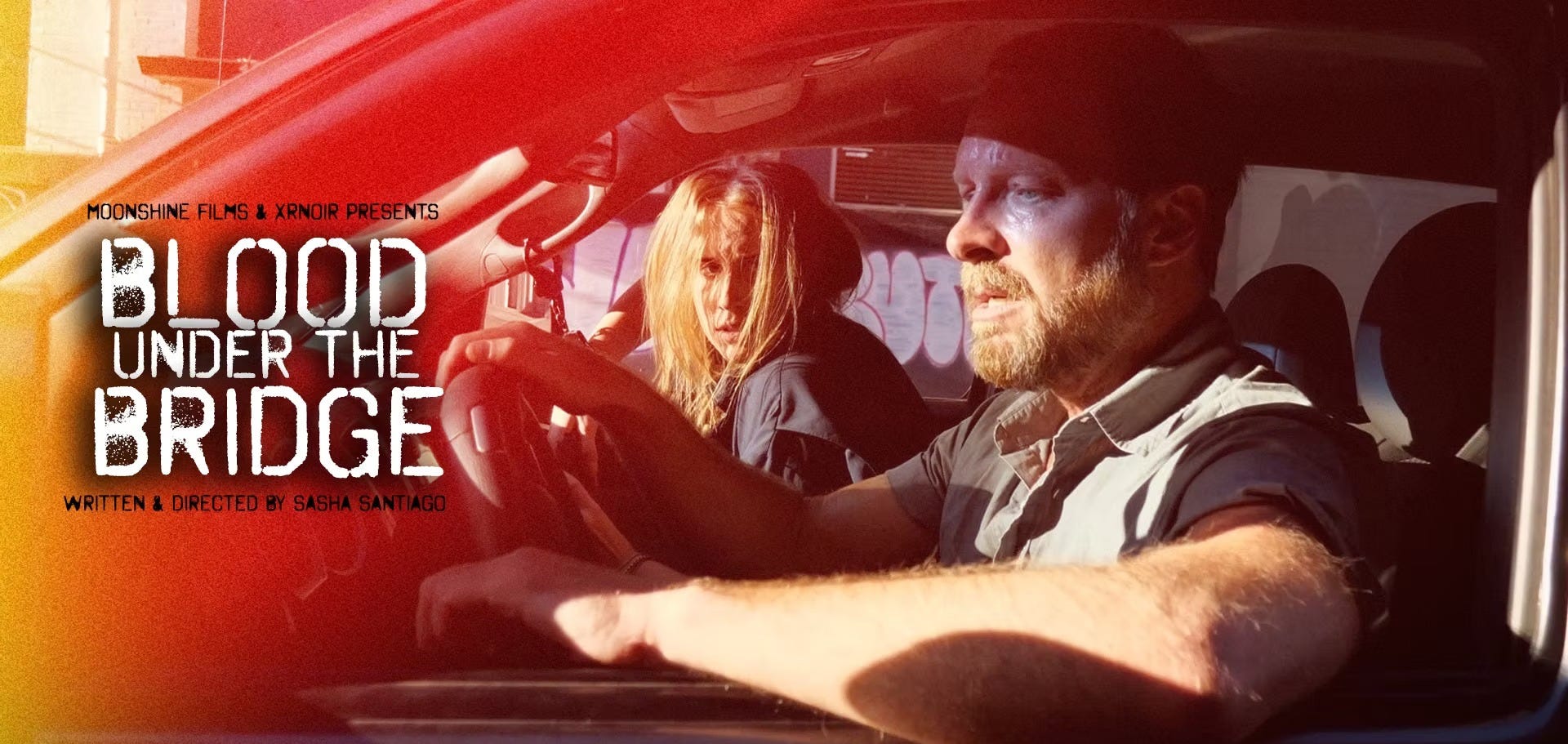
In an effort to cut through the hollow inspiration on FilmStack, I’ve included a 50-minute film I made for about $1,000.
If I’m not mistaken, the core driver behind FilmStack and Non-De is this shared vision that we can build films outside the studio system and drive them into the marketplace on our own steam.
I’ll give you the punchline of the post:
The biggest mistake I made on this micro-budget film (poster above) is I pretended I was making a higher-budget movie, and in the process, the film lost its way. But at least I didn’t spend $500K or $3 million to figure that out. I spent a grand. And guess what? You can to! Make your mistakes your own.
It’s quite possible that the next time I read someone talking about “permissionless” futures, decentralized cinema, or anti-gatekeeping philosophies on FilmStack, and I can’t immediately find a single example of their actual filmwork, I’m simply going to unsubscribe.
Not because I disagree with the ideas but because at a certain point, I need to start separating the signal from the noise. And honestly, I think you should too.
I’m preparing myself mentally to make a micro-budget feature film, and honestly, I don’t fully know what I’m looking for on FilmStack anymore beyond accountability. I want people to actually deliver the work, review each other’s films, and put real deadlines with clear dates on the calendar.
Maybe I’m looking for a reason not to go through with it. Or maybe I’m looking for the mystical spark that makes me jump off the cliff with no plan.
If that’s what you’re looking for, allow me to save you some time. It doesn’t exist.
You have to create your own urgency.
So instead of looking for the perfect post to pump me up, I started going back through my own filmography and studying my younger, less experienced, dumber self for answers.
I asked myself:
Out of all the no-budget films I’ve made, which ones actually worked? Not perfectly. Not commercially. But worked.
The one where I wrote it fast, cast new friends, stole killer locations, shot it in under a couple weeks, spent basically no money, survived on favors, and somehow had a great editing experience and still pulled off a somewhat coherent story with first-time amateur actors.
This film I made four years ago is Blood Under the Bridge. If I’m being honest, it might get a 7% on Rotten Tomatoes, but that’s beside the point.
It’s a fringe film. It cost about $1,000 to make, and I was the only crew member.
Technically, it holds together. The performances feel alive. The momentum works. The locations give it scale. There’s intention there. There’s energy there. There’s a filmmaker in there somewhere.
The biggest problem I see now is that the film is trying to be something it’s not.
So now I’m asking harder questions:
What exactly worked about it?
Where did it fall short?
What mechanics or moments inside the film actually created momentum? How did I build that moment?
What mistakes came from lack of experience and which limitations accidentally became strengths?
What can I refine now with more experience, without losing the rawness that made the thing feel alive in the first place?
Because I’m noticing something else too.
I am not seeing enough actual micro-budget filmworks being showcased on FilmStack. I hear a lot of legendary stories about other people’s movies, but very few firsthand accounts from people showing the work they made, how they made it, what worked, what failed, and what it actually cost them. To be fair, I can probably name ten FilmStackers who have the proof of work to back their posts. Maybe there are more and that’s my shortcoming to recognized.
I wish there were a place where I could watch everybody’s films, especially the people writing about cinema and the future of film on Substack.
Because right now, there is a kind of hollow inspiration floating around creative communities.
What’s being said sounds brave. It sounds radical. It tells people to think outside the box, break the rules, take risks, burn down the old system, invent a new language, and make something dangerous but nobody is making money doing it! So - it’s bullshit or sorry, it’s a really cool passion project.
Great. But then comes the obvious question:
Can you give me an example?
That is usually where people conveniently sidestep giving examples - in fear? In fear of what you might ask?
I think for some filmstacker, it’s maybe fear of revealing their taste and risking not being liked or agreed with. It’s that or they simply got nothing to show.
That is what I sometimes notice in the Non-De conversation around FilmStack. A lot of language about being radical, anti-industry, and outside the system.
And listen, I believe in a lot of it. But belief is not filmwork and dialogue is cheap on filmstack. Hardly nobody is getting paid to write long ass posts like this one.
If we are going to talk about a new cinema, then we need proof of work. What films are we pointing to? What experiments actually worked? What failed? What did you personally make, build, finance, distribute, or drag across the finish line?
Because otherwise we are not doing cinema. We’re talking about it and in Keith Richards words, talk is cheap.
In a world where we have ChatGPT to “fine-tune” posts
The real cutting edge requires more than dialogue, especially now, when it is so easy to hide behind screens. It requires evidence. It requires examples. It requires putting the thing on the table and letting people decide whether it is worth anything, or whether there are any spare parts in it worth taking.
So yes, let’s be bold. Let’s be dangerous. Let’s build outside the box.
If you’re chasing acceptance, whether on FilmStack or caught up in motivational cheerleading, you’re just in the business of blending in. Filmmaking, especially the raw micro-budget kind, demands that you risk building, failing, and standing out in the process. So stop hiding behind the screen. Drop your micro-budget film link in the comments.
Blood Under the Bridge was a 2023 finalist for Decentralized Pictures’ Andrews/Bernard Award, presented by Steven Soderbergh.
This contemporary noir was created fast and cheap by writer-director Sasha Santiago. It introduces a cast of complex characters, interconnected storylines, and a virtual environment that pulls viewers deeper into the action.
Story: When crime reporter Dahlia Delgado investigates the violent history of a rogue .38 revolver, she gets caught in Bridgetown’s web of deception, corruption, crimes, and misdemeanors.
The pilot was shot in a guerrilla film style: one filmmaker, a dozen actors, and a $1000 budget. Its aim is to set the stage for a true-crime indie series based in Portland, Oregon.